Showing posts with label Scientists. Show all posts

Friday, 20 September 2013

Even As MERS Epidemic Grows, The Source Eludes Scientists

Camel jockeys compete at a festival on the outskirts of Saudi Arabia's capital Riyadh, a focal point for the Middle East respiratory syndrome virus.

Fayez Nureldine/AFP/Getty Images Camel jockeys compete at a festival on the outskirts of Saudi Arabia's capital Riyadh, a focal point for the Middle East respiratory syndrome virus. Camel jockeys compete at a festival on the outskirts of Saudi Arabia's capital Riyadh, a focal point for the Middle East respiratory syndrome virus.

Fayez Nureldine/AFP/Getty Images

A year after doctors first identified an illness that came to be known as Middle Eastern Respiratory Syndrome researchers are reporting fresh genetic information about the virus that causes it.

The findings don't bring scientists any closer to understanding where MERS is coming from. In fact, the main news is that researchers were wrong about the source of some infections in the largest cluster of cases so far.

That would be in the province of Al-Hasa in eastern Saudi Arabia, the country where most of the world's 132 MERS cases and 58 deaths have occurred. The Al-Hasa outbreak was concentrated in several hospitals.

There have been 132 confirmed cases of the Middle East respiratory syndrome, as of Thursday.

Data from the Centers of Disease Control and Prevention There have been 132 confirmed cases of the Middle East respiratory syndrome, as of Thursday. There have been 132 confirmed cases of the Middle East respiratory syndrome, as of Thursday.
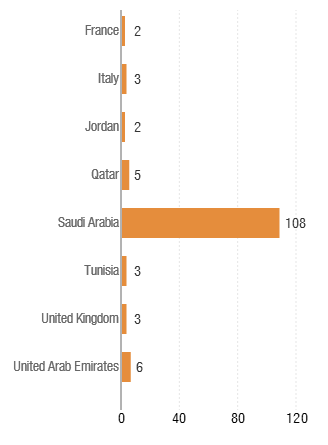
Data from the Centers of Disease Control and Prevention

Last month, an international team of health workers reported that 21 of the 23 MERS cases in Al-Hasa "were acquired by person-to-person transmission in hemodialysis units, intensive care units or inpatient units in three different health care facilities."

But that's not entirely right, scientists said Thursday in The Lancet. A look at the virus's genome indicates that some of those 21 cases weren't hospital-acquired infections after all. When researchers compared the viruses from some patients with those from other patients, who were presumed to be sources of the infection, the viruses' genetic codes were just too different.

"When we mapped the cases based on contacts, we were confident we knew the source of transmission," study author Ziad Memish tells Shots. He's the Saudi deputy health minister and the official in charge of the kingdom's response to MERS.

The new genetic analysis, Memish says, shows that there were more sources of infection in Al-Hasa than previously thought.

"The hypothesis now is [that] there were multiple introductions into the hospitals from the community, which gives us the clue that there is probably a community source of transmission," he says.

Those sources could be people with unrecognized mild cases of MERS. They could be animals that transmitted the MERS virus to people who ended up in the hospital. Or both. Memish leans toward animals as the likeliest source.

Whatever the source is, it seems to have gone underground for now, eluding the Saudis' continuing surveillance efforts. "There does not seem to be, you know, an ongoing source, since we have not seen any more cases in Al-Hasa since the cluster stopped," Memish says.

"My gut feeling is [that] there is some animal reservoir that is causing the transmission that is still to be found," he says.

Researchers found three distinctly different types of MERS viruses around the nation's capital, Riyadh. Given the pace at which such coronaviruses evolve, that means a single introduction of the MERS virus from an animal to a human, and then ongoing person-to-person transmission, isn't likely. Wherever the virus came from, it probably was transmitted multiple times.

So far the virus hasn't turned up in any of the bats, camels, goats, sheep, dogs, cats or rodents tested. Memish doesn't count a recent report that a small piece of a virus retrieved from a bat was identical to part of the MERS virus from the first reported case.

One Dutch team recently found evidence that camels had been infected with MERS or a very similar virus. But it didn't look specifically for the virus itself.

"We will continue to try to find the actual virus in an animal so we can confirm it," Memish says. But the animal search is really just beginning.

Memish says a team from the United Nations' Food and Agriculture Organization visited Saudi Arabia just this month. "We're waiting for guidance on what animals to sample, what sort of samples, how many of them, from which part of the country," he says. "Hopefully that will give us some results that will take us forward."

Some scientists think the effort to find the source of MERS hasn't been nearly urgent enough.

"What's really troubling here is that we should have had this kind of information long ago," says Dr. Michael Osterholm of the Center for Infectious Disease Research and Policy at the University of Minnesota.

Osterholm points to steady reports of new MERS cases (including 18 more from Saudi Arabia reported Thursday) as evidence that the virus is circulating mainly among humans — contrary to Memish's hypothesis that MERS is coming mainly from repeated animal-to-human infections.

"Week after week, month after month, I think the epidemiology suggests unrecognized person-to-person cases," Osterholm tells Shots. He has urged Saudi officials to do studies with people to figure out whether those people who got infected show specific patterns of exposures, like contact with animals or other people with symptoms.

"The fact that we have such incomplete information a year into this is just inexcusable," Osterholm says.

What's the urgency?

MERS has a 65 percent mortality rate among known cases. And it could conceivably acquire a few crucial mutations that would allow it to transmit efficiently among humans. That's exactly what SARS, a cousin of MERS, did back in 2003, when it transformed from an animal virus to one that spread easily among people.

Memish is sensitive to criticism that Saudi Arabia isn't doing enough to solve the mystery of MERS. "I know the criticism has not stopped from some people, but I can tell you we are working night and day," he says. "It won't be too long before we find out what's going on."

This weekend Saudi Arabia is bringing 45 experts from all over the world to try to solve the problem — or at least figure out how to. "We will have an amazing faculty," he says. "If all [those] experts cannot do it, you cannot blame us."

View the original article here

Wednesday, 11 September 2013

Lasker Awards Go to Five Scientists and Gateses

The prizes — $250,000 in each category — were announced Monday; the winners will be honored at a luncheon in Manhattan on Sept. 20. Since the foundation began making the awards, in 1942, 83 laureates have also won Nobel Prizes. These are the three categories and the winners:

CLINICAL MEDICAL RESEARCH Dr. Graeme M. Clark, 78, of the University of Melbourne in Australia; Dr. Ingeborg Hochmair, 60, of Med-El in Innsbruck, Austria; and Blake S. Wilson, 65, of Duke University in North Carolina.

The three scientists literally broke a sound barrier, developing the modern cochlear implant, a device that allows profoundly deaf individuals to hear and speak. They overcame enormous skepticism from other researchers and from advocates for the deaf, who said the earliest implants amounted to unethical human experimentation.

In 1978, the National Institutes of Health rejected an application for financing of human research on cochlear implants on “moral grounds.” It later supported such efforts after limited early successes.

Dr. Hochmair and Dr. Clark, working independently, began their multichanneled cochlear implants in the late 1970s, an effort that Professor Wilson soon joined and went on to advance with a new strategy. The combined effort “for the first time, substantially restored a human sense with a medical intervention,” the Lasker citation says.

Most hearing loss results from damage to the hair cells that help transmit sound waves through the snail-shaped cochlea in the inner ear to nerve cells the brain. The scientists’ cochlear devices use electrical stimuli to bypass such cells; they directly stimulate the main auditory nerve that conveys messages to the brain for processing as hearing.

Cochlear devices have helped 320,000 recipients around the world; many are children who get the devices at age 1 or 2 and go on to attend regular schools. Most recipients can use cellphones and follow conversations in relatively quiet places.

Earlier devices offered limited benefit because many recipients could not understand spoken words without visual hints like lip reading. Dr. Hochmair and Dr. Clark improved on those devices, and in 1991 Professor Wilson reported a new speech-processing strategy that overcame the hurdle for most recipients. All the while, the scientists had to find techniques to minimize the risk of brain infections and other potentially fatal problems.

“In retrospect, we designers of implant systems had to get out of the way and allow the brain to do its work,” Professor Wilson, an engineer who became a hearing scientist, said in an interview. “Once given a relatively clear and unfiltered input, the brain could do the rest.”

BASIC MEDICAL RESEARCH Richard H. Scheller of Genentech in South San Francisco, Calif., and Thomas C. Südhof of Stanford University, for their study of neurotransmission, the process by which nerve cells communicate with other cells in the brain. When Dr. Scheller, 59, and Dr. Südhof, 57, set out independently 25 years ago to explore the field, much of it was virgin scientific territory. Researchers had not identified a single protein in the neurotransmission process.

The two scientists were cited for transforming what had been a rough outline into a number of molecular activities to provide insights into the elaborate mechanisms at the crux of neurological activities, from the simplest to the most sophisticated. They did so by systematically identifying, purifying and analyzing proteins that can rapidly release chemicals that underlie the brain’s activities.

For example, the ability to taste, move limbs and use imagination depends on a biological relay system in which nerve cells spill chemicals to stimulate nearby neurons. The transmission process can take less than a thousandth of a second.

These two Lasker winners’ discoveries are beginning to help provide a molecular framework for understanding normal functions like learning and memory as well as some of the most severe mental illnesses, including schizophrenia.

PUBLIC SERVICE Bill Gates, 57, and Melinda Gates, 49, were honored for “spurring initiatives and research that tackle some of the planet’s toughest health problems.” The couple have donated billions of dollars from their foundation and coordinated with a number of public and private agencies involved in health work, enhancing the quality of life of millions of people.

In an interview, Mr. Gates said he and his wife were “learning as we go” in raising the visibility of global health issues, collaborating with scientists to reduce the burden of diseases that largely affect the poor. That was an abiding concern of Mary Lasker (1900-94), who set up the foundation with her husband and lobbied for years to increase taxpayer investments in health research. Now, Ms. Gates said in the same interview, their successes are dividends from such research.

The Gates foundation’s efforts include a heavy investment in buying vaccines for people in poor countries and in efforts to develop immunizations for diseases that have no vaccines yet. Another program seeks to educate African women waiting to give birth about simple nutritional measures to improve their family’s health.

Still another is trying to develop low-cost toilets that do not require water, for use in Africa. Governments in poor countries do not have the money to conduct such research. Once the toilets are developed, wealthier countries can finance production on a larger scale. “Philanthropy can sometimes take the risk out of the equation” in undertaking the initial steps in the research, Ms. Gates said.

Despite the foundation’s investments, “we’re not even halfway through the kind of impact we can have in global health,” Mr. Gates said, adding, “I wish we were.”

At one time in his career, Mr. Gates was criticized as insufficiently generous in his philanthropy. But in an interview in 1998, when he announced a $100 million gift to speed the delivery of childhood vaccines to developing countries, he said:

“You can always look back and say, ‘Hey, I could have sold all my Microsoft stock when I was 30 years old,’ but that would have been worth a small fraction of what it is now, and that would have been all my philanthropy.”

This article has been revised to reflect the following correction:

Correction: September 9, 2013

An earlier version of this article reversed two of the Lasker award categories. Dr. Graeme M. Clark, Dr. Ingeborg Hochmair and Blake S. Wilson will share the prize for clinical medical research;  Richard H. Scheller and Thomas C. Südhof will share the prize for basic medical research.


View the original article here

Saturday, 17 August 2013

Mid-Atlantic Dolphin Die-Off Leaves Scientists Puzzled

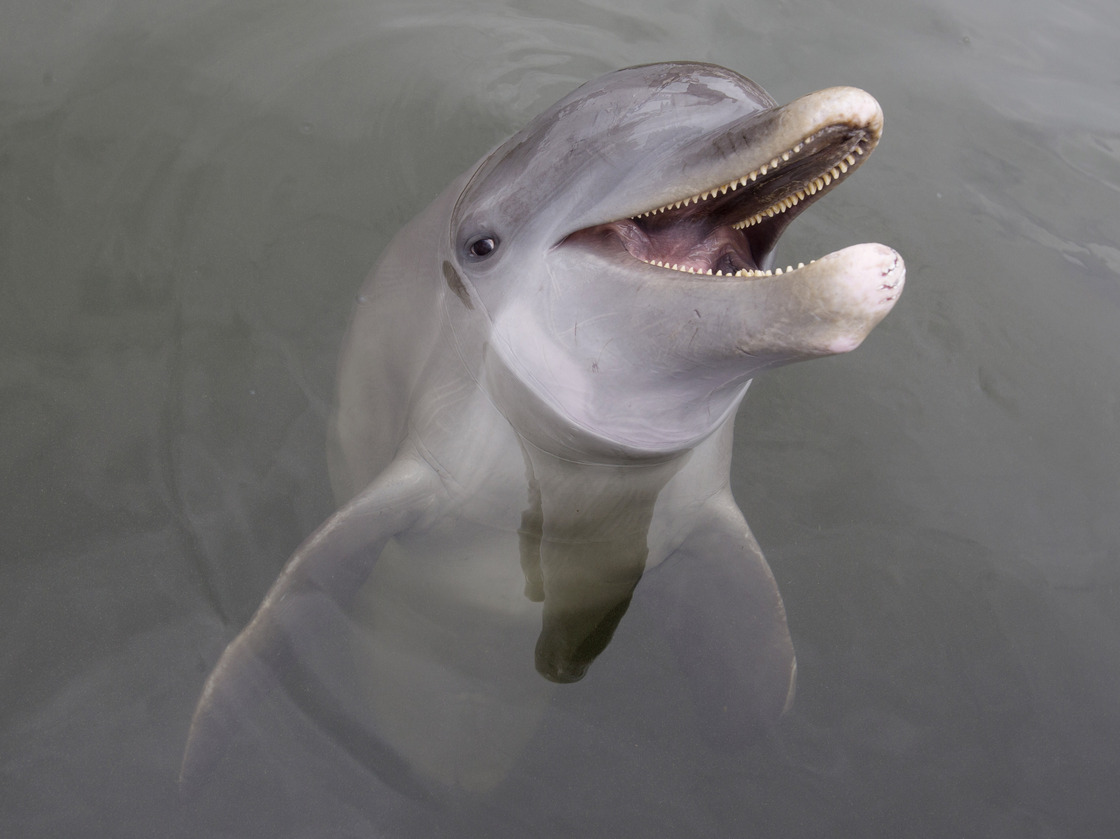
An Atlantic bottlenose dolphin at the Dolphin Research Center on Grassy Key in Marathon, Fla., in July.

Wilfredo Lee/Associated Press An Atlantic bottlenose dolphin at the Dolphin Research Center on Grassy Key in Marathon, Fla., in July. An Atlantic bottlenose dolphin at the Dolphin Research Center on Grassy Key in Marathon, Fla., in July.

Wilfredo Lee/Associated Press

Dead dolphins have been washing up in alarming numbers on mid-Atlantic beaches since July as scientists struggle to find a cause for the largest such die-off in a quarter-century.

More than 160 Atlantic bottlenose dolphins have turned up dead from New York to Virginia, says Charley Potter, a marine mammal collection manager at the Smithsonian Museum of Natural History, tells NPR's Weekend Edition Saturday.

Speaking with WESAT host Scott Simon, Potter – who is working with a rescue team from the Virginia Aquarium and Marine Science Center – says the kill involves "all age classes, both males and females" that "seems to have two centers of concentration – one in New Jersey and the other in Virginia."

While no definitive cause for the dolphin deaths has been determined, Potter says one possibility is the morbilivirus, a member of the same family of virus that causes measles and canine distemper.

Morbilivirus was pinpointed as a cause in a 1987 dolphin die-off, which killed some 2,500 animals. Potter says, it "has been found in some of the animals to date."

Scientists must now determine "whether or not the [morbilivirus] infection is something that's always been there and that we're picking it up because of increased surveillance or in fact it's the smoking gun," he says.

Delmarvanow.com quotes Teri Rowles, National Marine Mammal Stranding coordinator with NOAA, as saying the suspect virus is "at the top of our list to rule out."

Rowles tells the news website that the virus requires close contact to pass between dolphins, but that some of the marine mammals have antibodies that protect them.

According to Delmarvanow.com:

"There are four near-shore populations of dolphins from New York to North Carolina, said Lance Garrison, research biologist with NOAA Fisheries.

There is an estuarine North Carolina population that also moves north into Virginia, a southern migratory group off the coast of Virginia and a northern migratory group from Delaware to New York. In addition, there is a genetically distinct, offshore population, he said.

The northern group likely will likely begin migrating to the coast of North Carolina coast in October.

The southern group, which will also [begin] migrating in October, moves as far south as northern Florida, he said."


View the original article here

Dolphin Deaths Alarm Scientists

The animals are washing ashore at a higher rate than the last 26 years. Host Scott Simon speaks with Charley Potter, collection manager for marine mammals at the Smithsonian's National Museum of Natural History, about the response along the Mid-Atlantic.


View the original article here