Leaf Chromatography Materials 2-3 large leaves (or several small leaves) rubbing alcohol (isopropyl alcohol, 70-95%) coffee filters or filter paper Finely tear or chop the leaves. I like to put them in a coffee grinder for a few seconds. Alternatively, you could add a very small amount of alcohol to the leaves and run them through a blender. If you haven't already, add just enough alcohol to cover the chopped leaves. Allow time for the pigment to leach into the alcohol. Setting the container of leaves and alcohol into a bowl of hot water may speed the process. Allow about half an hour for the alcohol to pick up the color from the leaves. Make a Leaf Chromatogram Tear or cut a strip of coffee filter. Place one end of the strip in the leaf and alcohol mixture. The alcohol will run up the paper. As it evaporates, the pigment will be pulled up the strip. Smaller pigment molecules will move further/faster up the strip. Larger pigment molecules will stay closer to the starting point of the chromatogram. Allow the chromatogram to develop until you are pleased with the separation.If you collect leaves from the same plant as the season progresses, you'll be able to track the change in the pigment composition of the leaves. A similar process occurs in the spring or in other situations in which the environmental conditions change.
Wednesday, 11 September 2013
Another Way to Look at Autumn Leaves

Saturday, 17 August 2013
Mid-Atlantic Dolphin Die-Off Leaves Scientists Puzzled
An Atlantic bottlenose dolphin at the Dolphin Research Center on Grassy Key in Marathon, Fla., in July.
Wilfredo Lee/Associated Press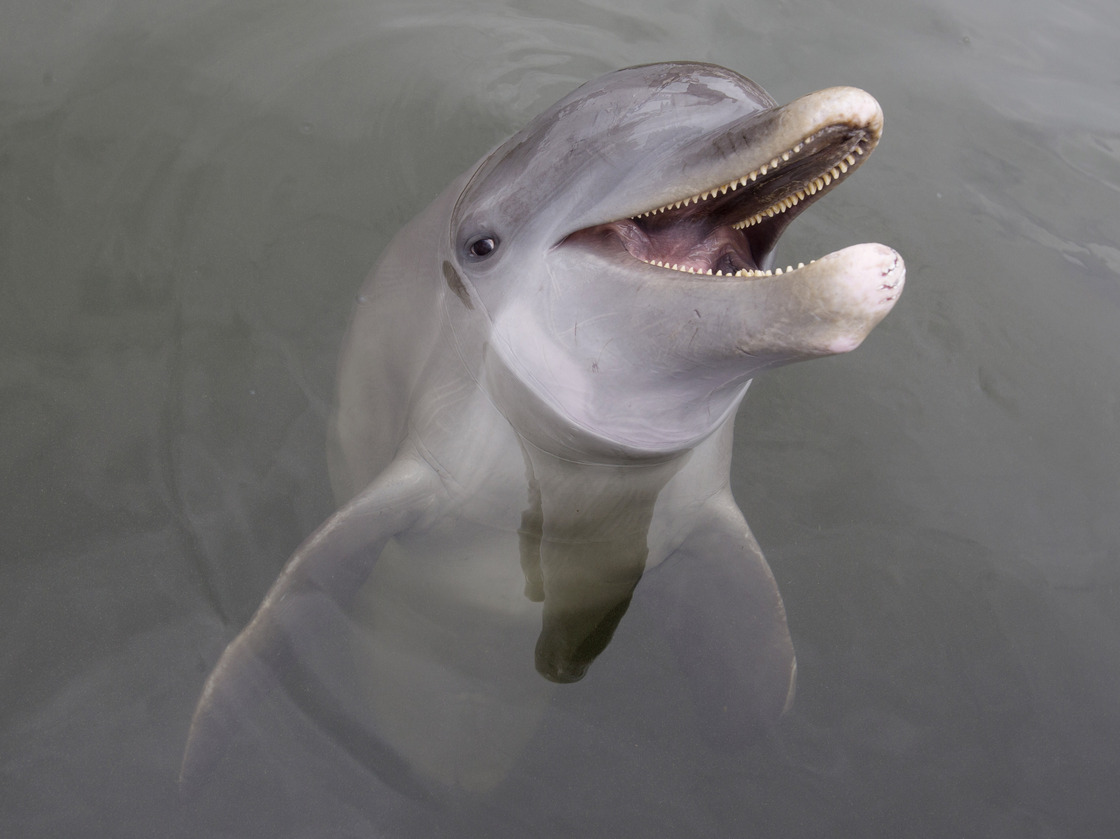 An Atlantic bottlenose dolphin at the Dolphin Research Center on Grassy Key in Marathon, Fla., in July.Wilfredo Lee/Associated Press
 Dead dolphins have been washing up in alarming numbers on mid-Atlantic beaches since July as scientists struggle to find a cause for the largest such die-off in a quarter-century.
More than 160 Atlantic bottlenose dolphins have turned up dead from New York to Virginia, says Charley Potter, a marine mammal collection manager at the Smithsonian Museum of Natural History, tells NPR's Weekend Edition Saturday.
Speaking with WESAT host Scott Simon, Potter – who is working with a rescue team from the Virginia Aquarium and Marine Science Center – says the kill involves "all age classes, both males and females" that "seems to have two centers of concentration – one in New Jersey and the other in Virginia."
While no definitive cause for the dolphin deaths has been determined, Potter says one possibility is the morbilivirus, a member of the same family of virus that causes measles and canine distemper.
Morbilivirus was pinpointed as a cause in a 1987 dolphin die-off, which killed some 2,500 animals. Potter says, it "has been found in some of the animals to date."
Scientists must now determine "whether or not the [morbilivirus] infection is something that's always been there and that we're picking it up because of increased surveillance or in fact it's the smoking gun," he says.
Delmarvanow.com quotes Teri Rowles, National Marine Mammal Stranding coordinator with NOAA, as saying the suspect virus is "at the top of our list to rule out."
Rowles tells the news website that the virus requires close contact to pass between dolphins, but that some of the marine mammals have antibodies that protect them.
According to Delmarvanow.com:
"There are four near-shore populations of dolphins from New York to North Carolina, said Lance Garrison, research biologist with NOAA Fisheries.
There is an estuarine North Carolina population that also moves north into Virginia, a southern migratory group off the coast of Virginia and a northern migratory group from Delaware to New York. In addition, there is a genetically distinct, offshore population, he said.
The northern group likely will likely begin migrating to the coast of North Carolina coast in October.
The southern group, which will also [begin] migrating in October, moves as far south as northern Florida, he said."