Showing posts with label Years. Show all posts

Wednesday, 11 September 2013

Answering The Cranes' Call: 40 Years Of Preserving Grace

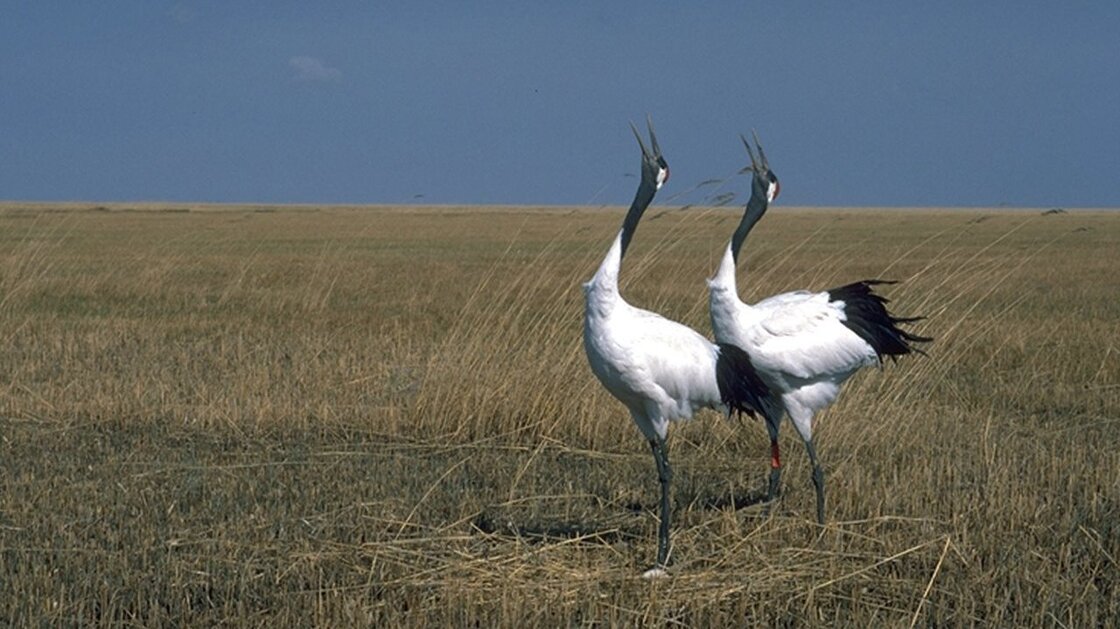
Mated pairs of red-crowned cranes perform a "unison call," a complex and extended series of calls between the male and female that reinforces the pair bond.

Sture Traneving Mated pairs of red-crowned cranes perform a "unison call," a complex and extended series of calls between the male and female that reinforces the pair bond. Mated pairs of red-crowned cranes perform a "unison call," a complex and extended series of calls between the male and female that reinforces the pair bond.

Sture Traneving

Of all the world's birds, perhaps none are more mystical than cranes.

From Asia to North America, these tall birds with haunting cries have been woven into paintings, literature and folk tales. But today, 10 of the world's 15 crane species are threatened, and some are on the brink of extinction.

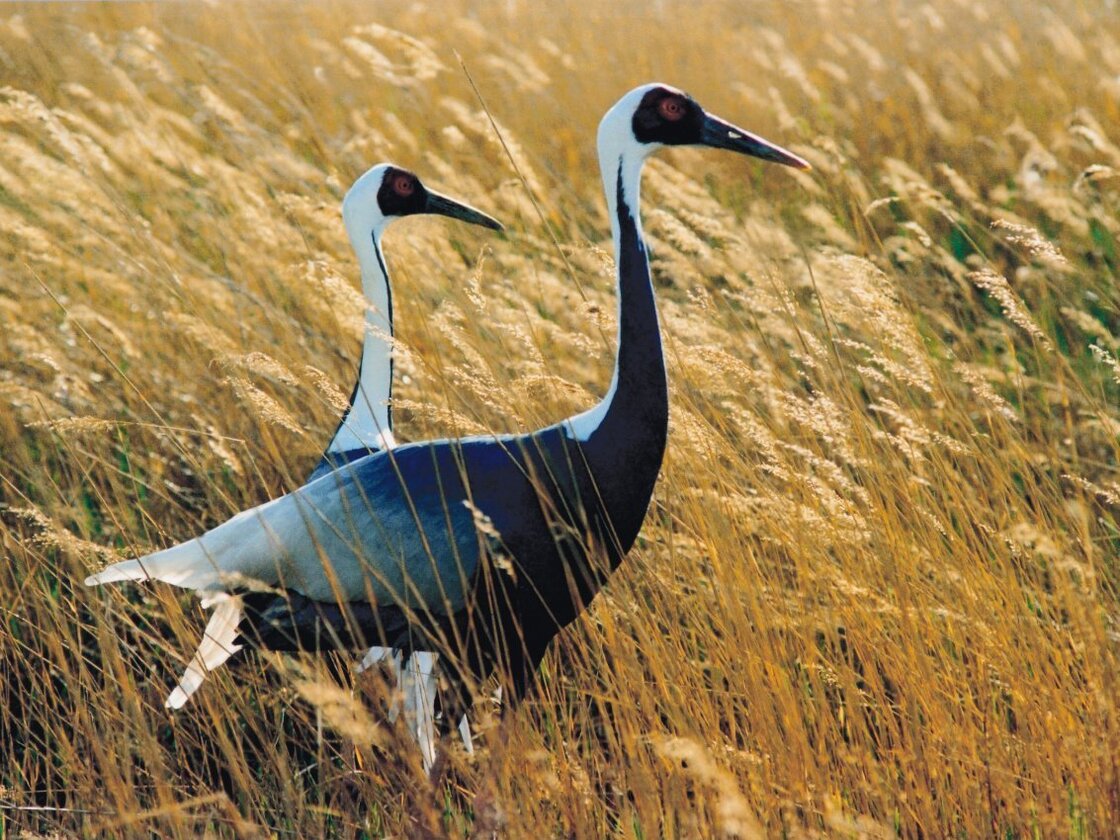
About 3,000 white-naped cranes migrate across the Korean peninsula every year — and several hundred winter over in the Demilitarized Zone between North and South Korea.

Crane Wu About 3,000 white-naped cranes migrate across the Korean peninsula every year — and several hundred winter over in the Demilitarized Zone between North and South Korea. About 3,000 white-naped cranes migrate across the Korean peninsula every year — and several hundred winter over in the Demilitarized Zone between North and South Korea.

Crane Wu

Their grass and wetland habitats are devastated all over the world. The International Crane Foundation, based in Wisconsin, has been studying and advocating for the birds for 40 years. George Archibald founded it with another young ornithologist on a family farm near Baraboo.

Archibald is still caring for cranes around the world. Speaking via Skype from a field expedition near Ulan Bator, Mongolia, he tells NPR's Jacki Lyden that "cranes are man-sized birds, most of them are 4 to 5 feet tall, they're monogamous, nothing they do is without grace."

On the characteristics of cranes

"The common denominator in cranes is that they are long-legged, long-necked birds with very big voices. Their voice can be heard for several miles on a still morning.

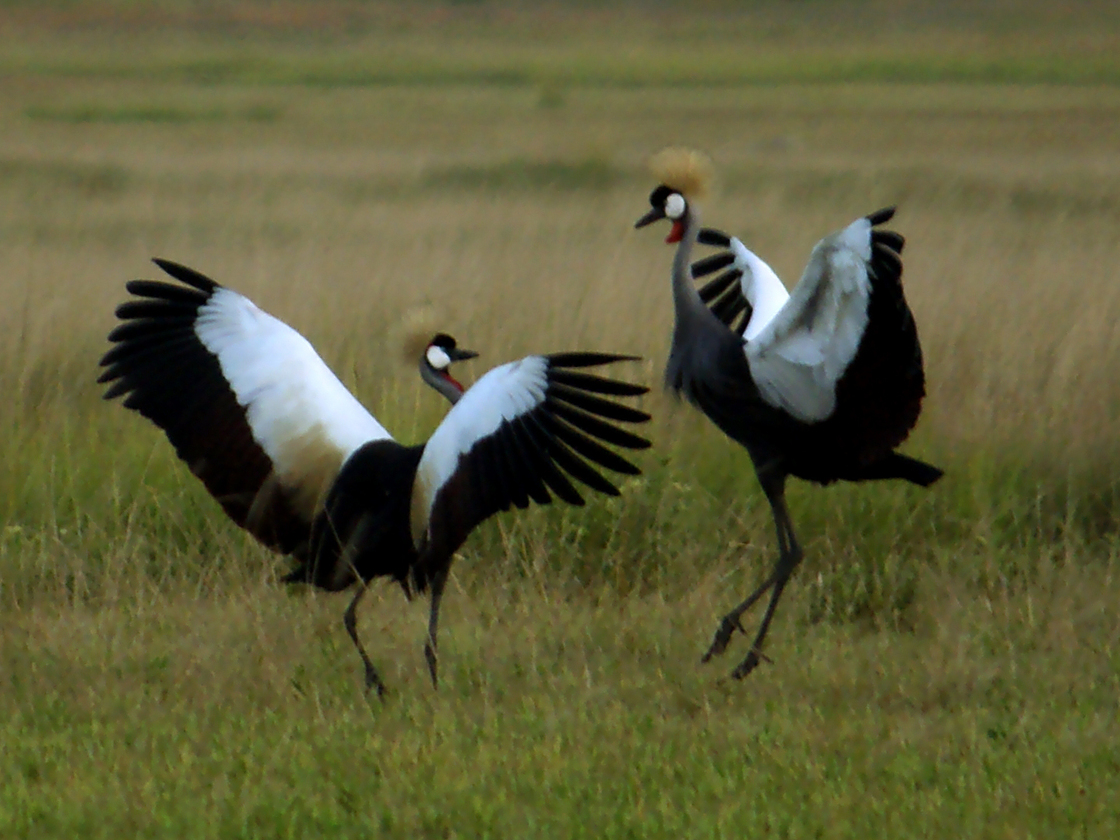
The grey-crowned crane, native to eastern and southern Africa, is endangered. Populations are declining 80 percent in some areas.

International Crane Foundation The grey-crowned crane, native to eastern and southern Africa, is endangered. Populations are declining 80 percent in some areas. The grey-crowned crane, native to eastern and southern Africa, is endangered. Populations are declining 80 percent in some areas.

International Crane Foundation

"When you see a marsh without cranes, it's very silent. When a crane is in a marsh, and they call, there's this great spirit that lifts up in that area and brings life and meaning to the whole place."

On crane recovery in Africa

"We're very concerned about the beautiful cranes of Africa, particularly the crowned cranes. They're being captured illegally and sent to the estates of the wealthy in the Middle East, and safari parks in China, and to animal dealers in Europe. We've had an 80 percent decline of the birds in East Africa, but we've had some successes, too. We have wonderful people working out there — Maurice Wanjala has established a community group to protect the cranes and the wetlands, and another guy, named Jimmy Muheebwa, in Uganda has actually restored some wetlands, and the cranes have come back."

On the cranes who winter in the Demilitarized Zone between North and South Korea

"[It] has several valleys where about one-third of the world's red-crowned cranes spend the winter, and where about one half of the world's white-naped cranes — that's about 3,000 birds — spend the months of October, November and February and March. It's a wildlife paradise because it's a no-man's land. But unfortunately, there are plans afoot to develop the lowland zones into factories, to provide jobs for North Koreans through South Korean-built factories.

Unison call of the red-crowned crane

"As long as tensions remain high between North and South Korea, the cranes are fine. But should things soften, the South Koreans have all these development plans on the table."

On the appeal of cranes

"They're simply beautiful creatures, and they live a long time, they live 20 to 30 years in the wild, and in captivity they can live to the ripe old age of 60 or so. They breed very slowly, they lavish care on their young, which is a value embraced by many people — and they're about our size, in many cases, so we can identify with them.

"When you have beautiful things in your environment, you want to paint them, you want to make stories about them, you want to dance like them — cranes are one of the few birds that really know how to dance."


View the original article here

Tuesday, 20 August 2013

Incredibly Shrinking Avocados: Why This Year's Fruit Are So Tiny

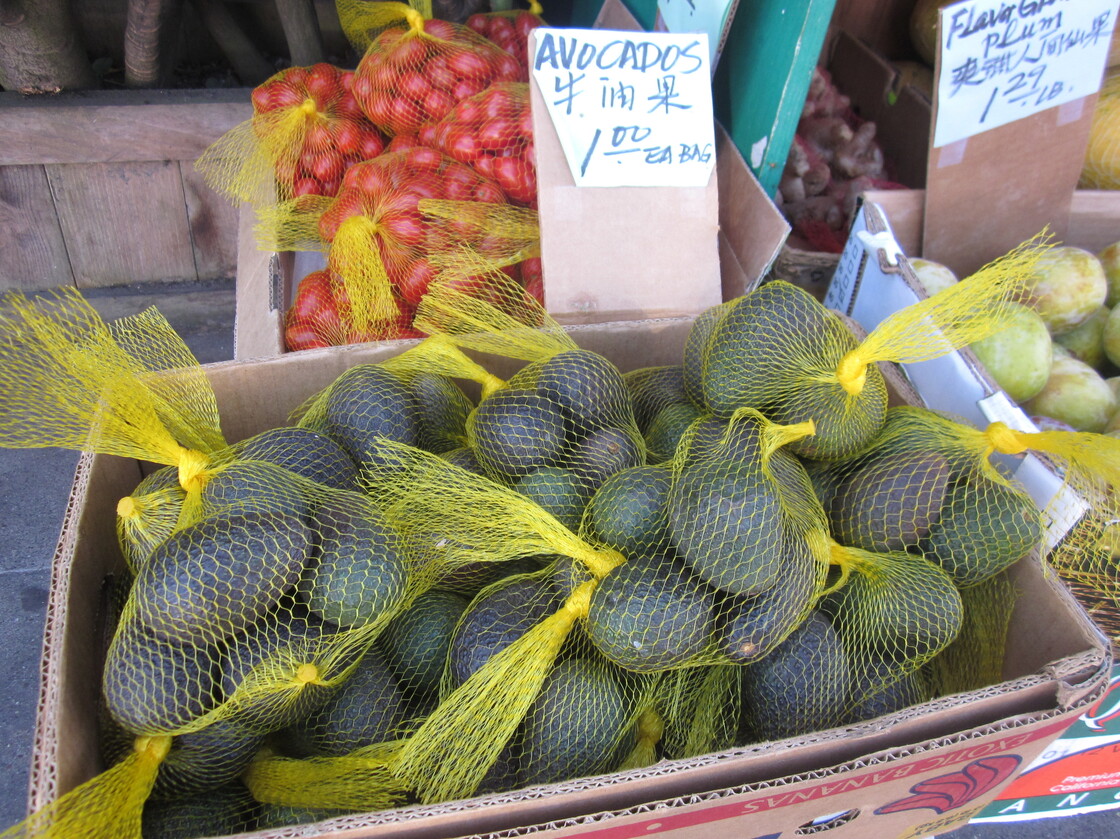
We found lots of avocados being sold six or 10 to a $1 bag in the San Francisco area. Some weighed less than 3 ounces.

Alastair Bland for NPR We found lots of avocados being sold six or 10 to a $1 bag in the San Francisco area. Some weighed less than 3 ounces. We found lots of avocados being sold six or 10 to a $1 bag in the San Francisco area. Some weighed less than 3 ounces.

Alastair Bland for NPR

What's thick-skinned and leathery, about the size of an egg, essential for guacamole and sold eight for a dollar?

No, not limes. Hass avocados. This year, anyway. These pear-sized fruits usually weigh half a pound or more. In the summer of 2013, though, hundreds of thousands of trees in Southern California are sagging with the tiniest Hass avocados in local memory — some just the size of a golf ball.

The main reason for the lemon-sized fruits, sources say, is a very unusual growing year that consisted of low winter rainfall in early 2012 (avocados spend more than a full year developing on the tree), erratic bee activity during the late spring bloom period, and lots of unseasonably cool and cloudy weather in the year since.

"I can't ever remember a season when all the avocados were this small, and that's over 30 years in the business," says Charley Wolk, a farmer with orchards in San Diego and Riverside counties. He cites a lack of rain and late pollination back in the spring of 2012 as main factors in the little avocados.

By most accounts, the fruits are about 30 percent smaller than usual. "That means less per pound wholesale," Wolk says.

Avocados larger or smaller than what is considered normal are generally less attractive to consumers, he says, and, therefore, command less money per pound. He says about 8 ounces is the optimal — and average — weight of a California Hass. A 25-pound case of such fruits usually draws $1.20 per pound, according to Wolk. With each ounce less in average fruit size, the per-pound rate can drop by 30 cents, he says.

But the positive trade-off is that this year's crop consists of more individual fruits than usual and, in fact, will probably weigh in at more than usual. Wolk says a half-billion pounds of fruit are expected by the end of October. Most years, the California avocado harvest — 95 percent of which is of the Hass variety — tips the scales at around 400 million pounds.

Gary Bender, a University of California avocado specialist and farm adviser in San Diego County, says that most years, several months after pollination, high July temperatures cause many fruits to drop off the branches. That didn't occur in the summer of 2012. The resulting abundance of individual fruits on each tree, combined with low rainfall, cool temperatures and sluggish photosynthesizing, has likely caused the stunting. Bender says that in 29 years on the job he has not seen such tiny avocados as those being picked this year.

Several growers told The Salt that 2013's avocados are weighing mostly 5 to 6 ounces — but that could be a generous overestimate. We collected avocados at several randomly selected grocery stores in San Francisco, and at each location — all independent, Asian-American owned shops — we found numerous avocados, being sold six or 10 to a $1 bag, that weighed in at less than 3 ounces, and several less than 2.

"That's just ridiculous," Bender notes.

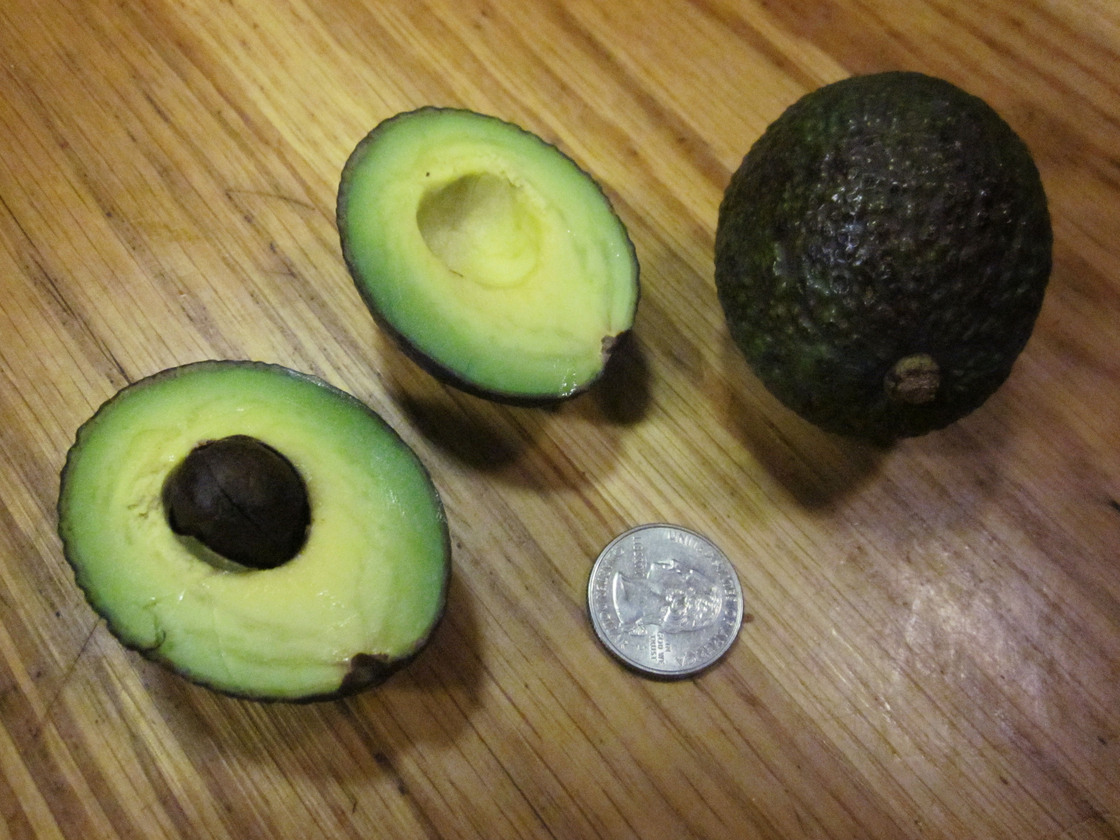
This season's avocados are the smallest in memory. We found some that were as tiny as 47 grams.

Alastair Bland/for NPR This season's avocados are the smallest in memory. We found some that were as tiny as 47 grams. This season's avocados are the smallest in memory. We found some that were as tiny as 47 grams.

Alastair Bland/for NPR

Jim Donovan, with the Mission Produce Company, a fruit wholesaler in Oxnard, says that harvesting 2-ounce fruits is likeliest to occur toward the end of the picking season, which wraps up in the fall.

Some growers, he explains, may selectively harvest bigger avocados all season and meanwhile wait for the smaller ones to grow larger. Avocados, unlike other fruits, can continue to gain size for months until they are picked.

"But eventually the farmer can't wait any longer because the tree will drop the fruit, so they do what we call a 'strip-pick,' and take every avocado left hanging," Donovan says. These tiny fruits may draw less than half the wholesale price of normal-sized avocados. Cases of exceptionally large avocados — sometimes 14 or 16 ounces each — can also draw less per pound, he says.

Elisabeth Silva, San Diego County's agricultural crime prosecutor who deals every year in a number of avocado theft cases, says there could be foul play behind the sudden flood of tiny avos. She describes a sly method of insider theft by which harvesting crews sometimes receive orders to pick only fruits larger than a certain size.

"So, sometimes they'll put those bigger fruits in the bins and they'll skim off the undersized fruits for themselves and sell them on the side," Silva says. These, she adds, can get "laundered into legitimate commerce." She says that while tiny avocados, sold in unmarked bags, could very well be stolen, grocers generally have no role in, or knowledge of, such illicit activity.

Farmers and other fans of bigger avocados may get relief next year when industry experts expect this spring's relatively low number of newly set fruits to result in fewer but larger avocados. Meanwhile, the little avocados of 2013 won't hurt you a bit. Donovan at Mission Produce points out that size and price may be down, but that quality is just fine.

"If you're willing to cut 10 pieces instead of two to make your guacamole, then you've got a bargain," he says.


View the original article here

Friday, 16 August 2013

After 11 Years Behind The Host Mic, Neal Conan Signs Off

NPR's Neal Conan reflects on his 11 years of hosting Talk of the Nation and thanks some of the influential contributors to the show along the way. After 36 years at NPR, Conan signs off.

Copyright © 2013 NPR. For personal, noncommercial use only. See Terms of Use. For other uses, prior permission required.

NEAL CONAN, HOST:

And so it's time to say goodbye. As you probably know, this, after 21 years, is the final broadcast of TALK OF THE NATION, and after 36 years, my last day at NPR.

Before I go, there are some people to thank. First, my predecessors in this chair: John Hockenberry, Ray Suarez, Juan Williams and the many substitutes who allowed us time off.

There have been dozens of people on the staff over the years, the people whose names you heard after Letters on Tuesdays, the people who made this program happen. I can't begin to list them all, but I do need to thank the crew that held the ring with me these last few hard months. Tinbete Ermyas, Libby Franklin, Monica Bushman, Laura Lee, A.D. Quig, Jessica Reedy, Priska Neely, our editor Sarah Handel, director Gwen Outen, senior producer Scott Cameron, senior supervising producer Carline Watson. And we do not get on or off the air without our techs.

Again, we can't begin to list them all, but on their behalf, our thanks to technical director Melissa Marquis. And, of course, I can't skip Political Junkie Ken Rudin.

There have been only two executive producers in my time on the show. So let me thank Leith Bishop, wherever she maybe, and especially Sue Goodwin. On this program and others, she and I have worked together for many, many years. She, more than any other person, can claim credit for our successes. I will miss her dearly.

I need to thank the bosses who decided to start this show and to sustain it over more than two decades. I need to thank the member stations, and not just the more than 400 who carried this program, but all of them, all those stations who collectively support NPR and allow us to borrow their outlets to talk with people across the country.

And I need to thank you. We're told that more than 3.6 million of you listen each week. That puts TALK OF THE NATION in the top 10 of all talk shows in the country. The currency of broadcasting is that number, the quantity of eyes and ears that can be delivered to soap manufacturers and carmakers. To be honest, we do a little bit of that on public radio, as well.

But on TALK OF THE NATION in particular, listeners have voices, too. This program works best when we find ways to engage your stories about your jobs and your kids, you fears and your successes, about what happened in the drought, the hurricane, in the fire, in the hospital, at the job and at school, in Iraq or Vietnam.

Over all my time at NPR, I worked as a reporter, editor and producer. And as much as I loved all those jobs, the past 11-and-a-half years, this job has been the best. It's been an honor to talk with you every day.

I counted them up: 600 weeks. Give away time off for vacation, throw in all the special coverage, let's round it off at 5,000 hours. There is still so much to talk about, but that's going to have to be enough.

So, in a minute or so, I will go back to where I started in public radio. I will be one of you again, a listener. Yes, a listener-sponsor, but a listener-critic, too. I will cry and laugh and yell at the radio. And we listeners have a vital function. It is our job to hold member stations and NPR accountable.

So right here, I form my own private compact with NPR and my member stations. I will listen and, yes, I will open my checkbook, but I need some services in return. Go and tell me the stories behind everything that happened in the world today. Explain why it happened, and how it affects our lives. Do it every day. Tell me what's important, and don't waste my time with stupid stuff.

Bye-bye. Signing off for TALK OF THE NATION and from NPR News, I'm Neal Conan, in Washington.

Copyright © 2013 NPR. All rights reserved. No quotes from the materials contained herein may be used in any media without attribution to NPR. This transcript is provided for personal, noncommercial use only, pursuant to our Terms of Use. Any other use requires NPR's prior permission. Visit our permissions page for further information.

NPR transcripts are created on a rush deadline by a contractor for NPR, and accuracy and availability may vary. This text may not be in its final form and may be updated or revised in the future. Please be aware that the authoritative record of NPR's programming is the audio.


View the original article here
Strengthening the Grid, Ten Years Later

Ten years ago this week, a massive electrical blackout struck the northeastern US and parts of Canada, affecting some 55 million people. IEEE Spectrum journalist Bill Sweet describes the causes of the outage and how the electrical grid has changed since the 2003 failure.

Copyright © 2013 NPR. For personal, noncommercial use only. See Terms of Use. For other uses, prior permission required.

FLORA LICHTMAN, HOST:

Ten years ago this week, you wouldn't have heard a regular edition of SCIENCE FRIDAY. Instead, you would've heard coverage like this.

(SOUNDBITE OF NEWS BROADCASTS)

UNIDENTIFIED WOMAN #1: The outage began shortly after 4:00 p.m. Eastern Time.

UNIDENTIFIED MAN #1: So everything went out - the computers, the phones, the TVs, everything.

UNIDENTIFIED WOMAN #2: The subways appear not to be running.

UNIDENTIFIED WOMAN #3: And in the Eastern U.S., New York City, Buffalo, New York, and parts of Connecticut and New Jersey, among others.

UNIDENTIFIED MAN #2: Small towns, from Detroit to the east, as well. None of the traffic lights are working, obviously. So things have gridlocked pretty quickly.

UNIDENTIFIED MAN #3: Many of the cities in the province of Ontario are without power right now.

UNIDENTIFIED MAN #4: Detroit Metro Airport is reporting no takeoffs.

UNIDENTIFIED WOMAN #4: There's no sign of terrorism as a cause, according to authorities.

UNIDENTIFIED MAN #5: Private citizens directing traffic. One guy, his qualification seems to be a whistle.

UNIDENTIFIED WOMAN #5: Some 50 million people live in the affected areas.

LICHTMAN: Remember that time? That outage happened late afternoon on a Thursday, and by Friday afternoon, our New York studios were just starting to get power back from that massive outage. So 10 years later, could that outage happen again? What did we learn from that 2003 blackout?

Joining me now to talk about it is William Sweet. Back in 2003, he coordinated much of the coverage of the blackout for IEEE Spectrum. That's a publication covering the electronics and electrical engineering industry. And now he's managing editor of the IEEE Smart Grid Newsletter, and the editor of its EnergyWise newsletter and blog. Welcome to the show.

WILLIAM SWEET: Thank you very much.

LICHTMAN: Have we changed since then?

SWEET: Oh, have we changed. It's a complicated and mixed picture. I'd say that in terms of the major cause of the blackout that was singled out in analytic reports in the following years, we probably have changed rather substantially for the better. The main cause of the blackout was found to be institutional more than narrowly technical, and I think that has been substantially addressed.

On the other hand, there were a lot of deeper, underlying causes that certainly had led some experts - even before the blackout - to think something like this was going to happen that have been a lot tougher to address, and which are, I think, to a certain extent, are still with us. So I don't think we can say that - we certainly can't say that the possibility of another really major blackout has been eliminated, and some would say that possibly can never be eliminated.

LICHTMAN: Right. I mean, let's take the WABAC Machine to 2003. I remember the lore about that blackout 10 years ago was that it was all caused by an infamous tree branch falling in Ohio. Is that true?

SWEET: That was certainly one of the significant causes of it. There was also a plant that started acting funny that had to be taken offline, which led to power outages, as well. And then a number of other transmission lines went down. This was all in an area of northeastern Ohio, which happens to be right on the major transmission corridor between the Middle West and the Northeast and mid-Atlantic states.

It's an area where electricity is going back and forth in huge volumes all the time. You know, it's like water sloshing back and forth back in a pan, depending on where demand is highest and whether our supply is higher or lower. And all of these problems arose within the operating area of one major Ohio utility, and it's fair to say that, although tree-trimming was certainly a significant factor in this, that the bigger factor was that these utility systems - that it needed to monitor what was going on in real time on the grid were not working properly.

And its visualization equipment in the control room was down, and so the utility was very slow to catch on to the fact that bad things were going on. Other neighboring organizations were actually quicker to see that there were problems in this area than it itself was. And that's really what led to things going out of control.

LICHTMAN: And that's gotten better, right? The monitoring has gotten better since then?

SWEET: It's gotten better. What's gotten particularly better is that national standards corroborating grid organizations have now been made mandatory. At the time that the blackout occurred, the utilities were joined together in a national electricity reliability organization that set standards and operating procedures for the grid.

But those standards were voluntary. Compliance with those standards was voluntary at that time. And the organization that coordinates those standards, the North American Electric Reliability Council, NERC, had been seeking legislation to have its standards made legally mandatory, but had been unable to do so at that point.

Since the blackout, and certainly one of the first results of the blackout was that the federal government finally kicked into action and passed national energy legislation making those standards mandatory on all participants in the grid so that, you know, if something like this were to happen again, that Ohio Utility could be found to have broken the law.

LICHTMAN: Right.

SWEET: And would be certainly civilly liable, and perhaps even criminally liable for the types of, you might say, inaction found to have occurred.

LICHTMAN: It seems like the electrical landscape has changed a lot. How is the grid holding up with renewable energies that are less predictable feeding in energy - wind and solar - into the grid?

SWEET: Well, that's...

LICHTMAN: Does that cause - is that a new threat?

SWEET: It's certainly a new problem that has to be contended with. As you get larger fractions of solar and wind energy, you have to contend with the fact that that kind of power is more unpredictable and, you know, sort of what's called baseline power in the industry, power that comes from really big plants like coal plants or nuclear plants or gas plants, they just keep churning out the electricity pretty much whenever you need it.

When you rely on reliable energy, of course, you're dependent on the sun shining or the wind blowing. And so that type of energy is quite intermittent, and that has to be taken into account in managing the grid. So, yes, that's a major new stress on the grid. And meanwhile, there were a lot of stresses already on the grid at the time of 2003 that are also still serious considerations.

LICHTMAN: I'm Flora Lichtman, and this is SCIENCE FRIDAY, from NPR. Talking with William Sweet from IEEE. So what are the things we're still worrying about?

SWEET: Well, I'd say two things that I would single out immediately that were already well identified before 2003. One was that, you know, by comparison with other industries, investment is quite low in the electric power industry. And people, you know, who are concerned about the industry have been complaining about this for decades, but investment is still quite low in the electric power industry, so that you don't see a lot of money being put into the development of new technology.

So we have these challenges like the one you were just mentioning, integration of renewable energy, and yet we're not seeing a big increase in investment to figure out how to contend with those challenges. At the same time...

LICHTMAN: Is this - are we talking about building a smarter grid?

SWEET: That's part of what's involved, yeah, building a smarter grid, one in which you integrate communications and computing technology with, you know, old-fashioned grid technology to make the grid much more controllable and much more responsive. Yes, that is part of it.

The other thing is that there has been a chronic shortage of skilled personnel in the grid at all levels, and I'm talking about everything from those people who go out and trim trees and, you know, keep the power lines in order, to the computing and software engineers who figure out how to control the grid on a grand scale.

And people started to complain in the 1990s that a lot of skilled people who might be working in these fields were getting siphoned off to the Internet and everything related to that. And you can see how that would be - it's easy to see intuitively how that would be a problem, that, you know, everybody - all these technicians who are out installing your high-speed connections for your home computing and your home video and so on who might otherwise be keeping your electrical lines in order.

So this is a - this has been a chronic underlying problem. There were big power outages in the west in the late '90s, and a lot of analysis was done under the direction of the Department of Energy on those outages, and this was what they found. They found this pattern of chronic underinvestment in the grid and labor, you might say labor shortages.

LICHTMAN: I have just about...

SWEET: (unintelligible) the grid.

LICHTMAN: ...30 seconds left but, I mean, are you saying that we might not have the number of personnel, skilled personnel to actually upgrade the grid if we wanted to?

SWEET: Yes. You know, under Obama's stimulus package, a lot of money was put into installing smart grid devices. But what we're seeing now is that, actually, we don't have really the personnel we need to make those devices yield the kinds of returns we want to see from them.

LICHTMAN: Hmm. That's about all we have time for. Thanks for joining me today.

SWEET: It was a pleasure being with you. Thank you.

LICHTMAN: William Sweet is managing editor of the IEEE Smart Grid Newsletter and the editor and lead contributor to IEEE Spectrum magazine's EnergyWise and newsletter and blog.

Copyright © 2013 NPR. All rights reserved. No quotes from the materials contained herein may be used in any media without attribution to NPR. This transcript is provided for personal, noncommercial use only, pursuant to our Terms of Use. Any other use requires NPR's prior permission. Visit our permissions page for further information.

NPR transcripts are created on a rush deadline by a contractor for NPR, and accuracy and availability may vary. This text may not be in its final form and may be updated or revised in the future. Please be aware that the authoritative record of NPR's programming is the audio.


View the original article here